SOC 2 readiness and security questionnaires
An expert-led trust program your enterprise buyers can verify.
AI Governance, SOC 2 readiness, ISO 27001, and the Annual AI Trust Review, delivered by credentialed specialists on a single managed platform. From first assessment to annual attestation.
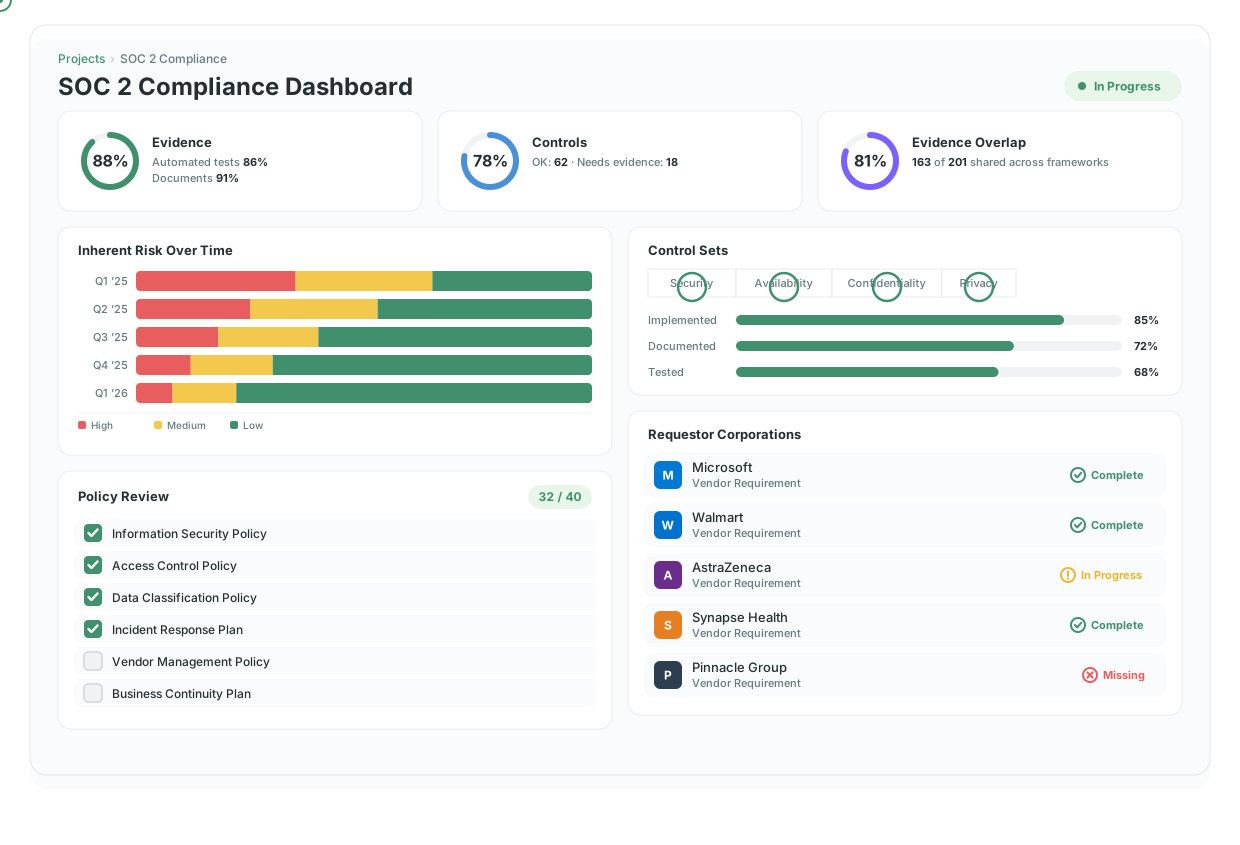
Greenplaces Trust delivers AI Governance, SOC 2, ISO 27001, and the Annual AI Trust Review through one dedicated team, with controls and evidence that carry from one requirement to the next. AI Governance is the entry point. SOC 2 is the destination. Most of the work overlaps; you start once and finish everywhere.
Many trust clients also face AI governance requirements from the same enterprise buyers. Compliance pressure often spans both security and sustainability, we handle both from one engagement.
One team. One platform. Every trust requirement, audit-ready.
The same Big 4-credentialed experts who design your AI governance program will stand behind your SOC 2 attestation, your ISO 27001 ISMS, and your annual board-level trust review. Build the controls once. Reuse them across every requirement.
AI Governance Program
Stand up a real AI governance program before your board, clients, or insurers ask for it. Use-case inventory, risk assessment, data governance, tool intake, EU AI Act and NIST AI RMF alignment. The fastest-moving requirement and the easiest place to start.
SOC 2 Readiness
Meet the SOC 2 bar your enterprise buyers require, fully managed by credentialed experts. Readiness assessment, controls design, continuous evidence management, auditor coordination. A SOC 2 report retires hundreds of recurring security questionnaire questions.
ISO 27001
Build toward ISO 27001 on the same controls foundation. The internationally recognized information security standard, recognized everywhere your enterprise buyers operate.
Annual AI Trust Review
A recurring, board-level review of AI risk, governance, and controls. The ongoing assurance that keeps your trust program current as tools, risks, and regulations change year over year.
Start with AI Governance. Finish at SOC 2. Recurring assurance built in.
Most of our Trust customers start where the pressure is most immediate, AI governance, and continue into SOC 2 and ISO 27001 because the same controls foundation gets them most of the way.
AI Governance, the entry point
Your employees are already using AI tools with client data. Your buyers and regulators now ask what touches their data. We stand up the program in weeks: inventory, risk classification, policy, training, governance committee.
SOC 2, the destination
Most AI governance controls map directly into SOC 2’s Trust Services Criteria. We extend the foundation we built in phase one into a full SOC 2 readiness program, with continuous evidence collection feeding the audit.
Annual Trust Review, the recurring anchor
Each year we run a board-level Trust Review that keeps your program current as AI tools, regulations, and customer expectations evolve. SOC 2 stays attested. ISO 27001 stays certified. Your buyers stay confident.
A SOC 2 report retired hundreds of the questionnaire questions our deals used to stall on. Greenplaces ran the whole program; we approved the policies they drafted and showed up for the audit.
Your enterprise customer just asked for SOC 2. We’ll handle it.
Get a Trust readiness assessment. Bring the client request, the questionnaire, or the gap you’re worried about. We’ll map the path. No cost, no commitment.